Can bees stop doing stuff, please?
On the disquiet of writing and the question of intelligence
I’ve now written two non-fiction books and, each time, the process has been tinged with a sense of low-level anxiety. A worry that I have misunderstood something fundamental, or missed some groundbreaking result that refutes my argument. That I don’t know what I don’t know. That my peers or readers will out me as being wrong.
Most of the time, I try to convince myself that this is nothing more than a touch of healthy neuroticism. Perhaps this is what it’s like for everyone—maybe this is what it means to really care about something, to commit one’s convictions and beliefs to the page and to offer them up for scrutiny by others. Who wouldn’t feel a little concern at this prospect?
But sometimes reality bites back, when the thing I’m worried about actually comes to pass. That happened this month, with the publication of a paper showing that bumblebees (bees FFS!) can solve a problem they have never previously encountered. The capacity to innovate is suggestive of genuine intelligence, something that is generally reserved for other species, like parrots, primates and (of course) us.
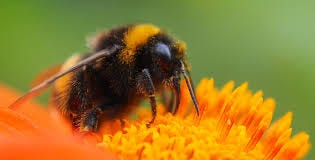
Why do I care? Well, the book I’ve just finished writing— THE THINKING ANIMAL—is on exactly this topic. It is a book that showcases the diversity of animal minds, asking what intelligence is and where we find it. I’ve spent years, and missed several submission deadlines, trying to craft a coherent narrative, one that explains why we see intelligent behaviour in some species but not in others. And now I have bumblebees and their shenanigans to consider. It is most inconvenient.

I jest (sort of). It can be useful to having one’s assumptions challenged—and the bees have definitely done that. To see how, we need to first consider what intelligence actually is. Although it can be tricky to define, many researchers now agree that it presents as behavioural flexibility—the ability to stop failing approaches, try different ones, and intuit novel solutions. Until the bumblebees came along, compelling evidence in insects was scarce. We knew they were capable of impressive feats but these were typically explained as the product of simple learning mechanisms, not raw ingenuity. That meant, when it came to the question of intelligence, I could safely put bees to one side.
But what if they do belong in the intelligent club after all?
What did the bees do?
The bee study riffed on a well-known paradigm in animal cognition, known as the box-and-banana task, which was first run on chimpanzees. Chimps were placed in a room with some wooden boxes and food (e.g. a bunch of bananas) that dangled out of reach. The question was whether they would put 2 + 2 together, by stacking the boxes to reach the food. Chimpanzees can do this, and (in a modified version) so can elephants. But bees?
Apparently, yes.
The bee version of the task was pint-sized: a small, circular testing chamber with a food reward (a blue ‘flower’) and a small Styrofoam ball, like the ones you find inside a beanbag. In the first training phase, bees learned that they could obtain a sugary reward from the ‘flower’ and—separately—that they could roll the lightweight ball around the test chamber. In a second phase, they were trained to push the ball off the blue flower to access the sugary solution, helping to link the action of moving the ball with obtaining a reward.
Next came the intelligence test.
Now the researchers moved the blue flower from the floor of the testing chamber to the ceiling—out of reach for the bees, just like the bananas were for the chimps. They stuck the bees back in the chamber with the ball, and waited. In principle, bees could access the food by rolling the ball under the flower and climbing on top of it. But doing this required them to solve a problem they had never encountered. Astonishingly, however, this is exactly what they did1. And this behaviour was not only observed among a couple of individuals, but in the majority of the animals tested.
But before we get too excited, there are some simpler ‘killjoy’ explanations to rule out. Firstly, we know (from previous work) that bees enjoy playing with balls. This might conjure up an image of a bee having a great time, rolling a tiny football around, but this detail also introduces a problem for the ‘intelligent bees’ idea. It suggests that the bees could have simply been having fun with the ball, and only used it to access the food when they happened to roll it past the flower. This sounds less like insight and more like opportunism. If this was the only experiment they had run, I would have been able to relax.
But it wasn’t. In two subsequent experiments, the authors made the challenge progressively harder, aiming to rule out such deflationary explanations. In one, the flower was placed on one side of a barrier, and the ball on the other. Here, the bees had to retrieve the ball and guide it through a small opening to get the food. Once again, most succeeded. In a second and even more convincing task, the enclosure had two identical barriers at each end, and the flower was placed behind one of them. If bees were rolling the ball at random, we’d expect them to roll the ball in both directions. Instead, they overwhelmingly directed it to the side where the flower was located. Together, these experiments are difficult to dismiss.
The bees look, and behave, as if they know exactly what they are doing.
So what does this all mean?
Well, it definitely means I have some edits to make. More fundamentally, it challenges our notions of where we might find intelligence in species other than our own. For too long, intelligence has been associated with big brains, or assumed to be restricted to species that sit closer to us on the evolutionary tree. The bee study shows that both of these assumptions are incorrect. Resemblance to humans and brain size are unreliable predictors for intelligent behaviour.
What is going on in the minds of the bees is less clear, however. It is unlikely that bees and humans solve novel problems in the same way, or have the same subjective experience while doing so. For us, the realisation of how to solve a problem—the moment of insight—is often characterised as “abrupt” and “unexpected”. Insight is associated with mental restructuring, where we see things in a new way (a bit like the perceptual shift we experience when staring at a Necker Cube).

Stare at this Necker Cube for a while and you will see it flip orientation.
Finally, insight is also subjectively rewarding–the A-ha! moment when we see the solution feels good.
It is uncertain and (for now) unknowable whether bees experience anything like this when they solve a novel problem2, though my hunch would be that they do not. It seems noteworthy that bees only succeeded in the experiment if they had previously learned to move the ball to get a food reward. Bees in a control group, that did not perform this training step, never worked out to get the food. To my mind, this suggests that their problem-solving success depends critically on a learnt association (move ball=get food), and that they cannot ‘reason’ their way to the solution without it.
Problem-solving in bees and problem-solving in humans might therefore be very different experiences. But why should we expect anything else? An animal need not have a mind like ours to display intelligence. Just as electric cars and petrol ones can both drive despite having very different ‘engines’, problem-solving behaviours that look similar on the surface can be generated by different cognitive machinery.
Our brand of cognition has evolved in response to the specific selection pressures that we have faced, just as that of bees has evolved in response to theirs. And while we can justifiably marvel at behavioural similarities—they like balls! they solve problems! they’re like us!—more marvellous still is to consider how we might differ. Intelligence may be more widespread than we have imagined, but perhaps it is also more diverse than we can imagine.
The Social Instinct (2021) is available to buy here (US) and here (UK).
The Thinking Animal: What Other Intelligence Reveals About Our Own will be published in 2027 and is available for pre-order now.
As the authors themselves acknowledge.